We're here to take your call Monday - Friday 10am - 5pm | CONTACT US
OFFICE: 01296 323000 | MOB: 07542 131400 | EMAIL [email protected]
We're here to take your call Monday - Friday 10am - 5pm | CONTACT US
OFFICE: 01296 323000 | MOB: 07542 131400 | EMAIL [email protected]

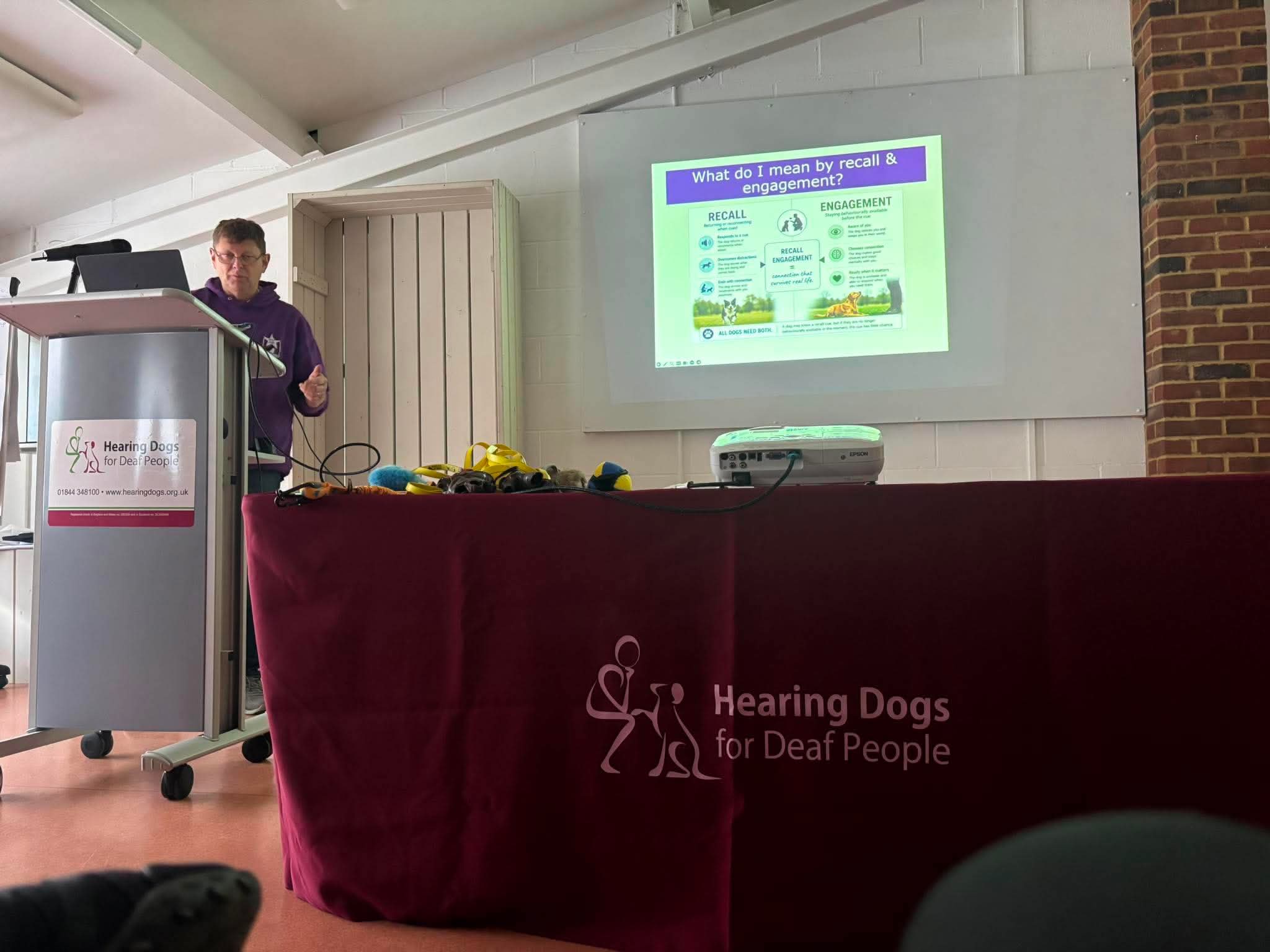 An Afternoon with Hearing Dogs: Recall, Engagement and High-Drive Dogs
Last week, I had the real pleasure of spending the afternoon with a room full of fantastic trainers from Hearing Dogs.
The session focused on recall, engagement, and working with high-drive dogs. These are subjects that sit right at the heart of practical dog training, especially when we are working with dogs who are naturally motivated by movement, scent, searching, chasing, exploring, or simply getting on with the job in front of them.
One of the key themes we explored was the importance of understanding what a dog is naturally inclined to do.
For some dogs, the world is full of information they feel compelled to investigate. A spaniel may be drawn into scent. A dog with a strong chase history may lock onto movement. Another dog may find the environment itself highly rewarding and struggle to disengage once they are focused on something.
This is not usually a dog being deliberately difficult. Often, their attention is simply somewhere else. Their brain is busy processing the thing that matters most to them in that moment.
That distinction is important.
If we label the dog as stubborn, naughty, or wilfully ignoring us, we are more likely to respond with frustration. If we understand that the dog is highly motivated, highly focused, or emotionally and behaviourally invested in something else, we can train with more accuracy and more compassion.
Recall is often thought of as a single behaviour: we call the dog, and the dog comes back.
In reality, good recall is built from lots of smaller skills and habits.
A reliable recall depends on the dog being able to notice the handler, disengage from the environment, turn back, move towards the person, arrive close enough to be safely managed, and then remain connected rather than immediately disappearing again.
That is quite a lot to ask, especially in a busy or exciting environment.
During the session, we looked at ways to build these layers gradually. This included reinforcing voluntary check-ins, rewarding moments of reconnection, using food placement thoughtfully, building value close to the handler, and creating predictable patterns that make returning feel easy and worthwhile for the dog.
Rather than waiting until the dog is already at full speed heading towards something exciting, we can spend time building the habit of staying aware of us in the first place.
A big part of working with high-drive dogs is learning how to channel their motivation rather than trying to simply stop it.
Drive is not the enemy. In many dogs, it is part of what makes them brilliant.
The aim is not to flatten the dog or remove their enthusiasm. The aim is to help the dog develop skills around that enthusiasm, so they can still think, respond, and stay connected.
That might mean using searching games, movement-based reinforcement, structured sniffing opportunities, or carefully planned training setups where the dog can practise responding before the situation becomes too difficult.
It is a bit like working with a powerful engine. You do not necessarily want to remove the power. You want steering, brakes, control, and good handling.
We also spent time considering the role of the environment.
Dogs do not learn in a vacuum. The same dog who recalls beautifully in a quiet hall may struggle in a field full of scent, wildlife, movement, and space. That does not mean the dog has forgotten the training. It means the difficulty has changed.
Good training means adjusting the environment so the dog can be successful.
This might involve using long lines, choosing quieter locations, starting with lower distractions, allowing decompression time, or setting up exercises where the dog can rehearse the behaviour we want rather than repeatedly practising the behaviour we do not want.
Management is not failure. It is often what allows training to work.
As with all good dog training, the human side matters too.
Handlers need practical tools they can use in real situations. They need to understand when to call, when not to call, when to wait, when to reinforce, and when to simply give the dog more space to process the environment.
For volunteer handlers and people supporting dogs in everyday life, this is especially important. The training needs to be realistic, repeatable, and kind to both dog and person.
Small changes can make a big difference. Noticing when a dog checks in. Reinforcing the dog for choosing proximity. Building little moments of connection throughout a walk. Using the environment thoughtfully. These are all simple ideas, but when applied consistently, they can have a powerful effect.
It was a brilliant afternoon, and I thoroughly enjoyed it.
There was lots of thoughtful discussion, plenty of shared experience, and a real commitment to doing the best for the dogs in everyone’s care.
Thank you to Hearing Dogs for inviting me. It was a privilege to spend time with such a dedicated group of trainers and to be part of conversations that ultimately help both dogs and the people they support.